
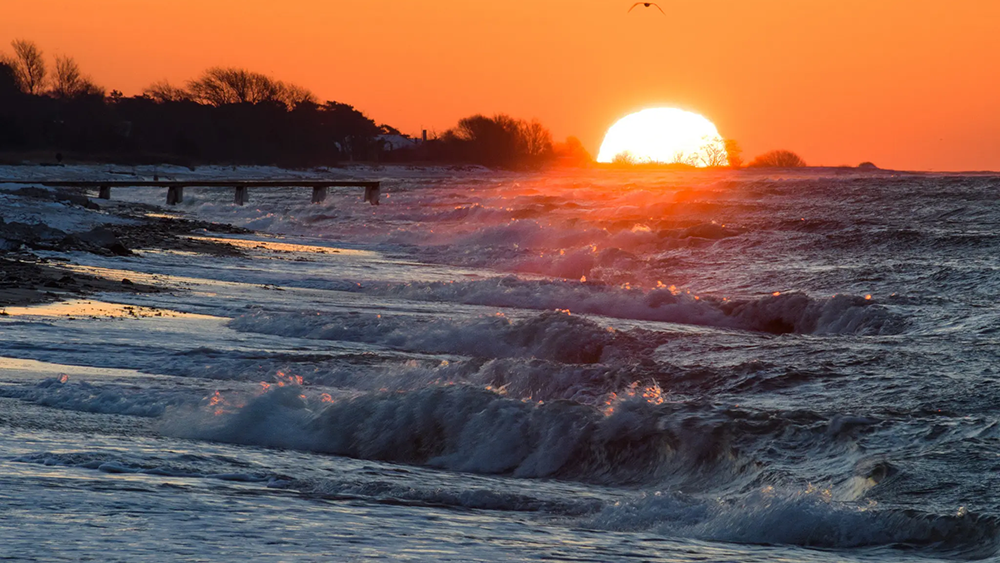
The HARCCA (Hotspot Resilience: Co-Construct Approaches to CoastalClimate Adaptation) project is built on the idea that climate adaptation only scales when the right people can work as one team across borders, disciplines, and decision levels. In the project, this “network engine” is formalised through the HALL (Hotspot Adaptation Living Lab) network as a community of practice, supported by mechanisms such as the HALL Senate and the Coastal Adaptation Academy to accelerate learning, replication, and uptake.
Coordinator of HARCCA is Dr. Caroline Hallin (Division of Water Resources Engineering, Lund University), and the proposal frames her role as central to keeping the consortium aligned and delivering across work packages. Just as importantly, HARCCA is strengthened by expert international networks beyond the formal consortium, networks such as Water KIC / the OneWater Consortium, which can dramatically improve matchmaking, trust, and speed of knowledge transfer in large multi-stakeholder projects.
The challenge that HARCCA targets
Europe’s coasts are already facing unprecedented climate-related impacts, and the proposal highlights that fragmented governance and siloed planning often slow down coherent action. HARCCA responds with an implementation-focused Innovation Action that integrates digital tools, nature-based solutions, governance innovation, and participation to avoid maladaptation and enable real-world uptake. A flagship output is the open-source DIGI‑ADAPT platform, designed to support multi-hazard risk assessment, communication, and adaptation planning across scenarios to 2100 and up to 2150.
Eight Living Labs across Europe
HARCCA’s work happens in eight Coastal Hotspot Adaptation Living Labs (HALLs): five demonstrators and three replicators, designed to turn local solutions into transferable approaches. The HALL locations are: (D) Coast of NW Netherlands (IJmuiden–Texel), (D) Ria de Aveiro coasIJmuiden–Texel), (D) Ria de Aveiro coast and lagoon (Portugal), (D) Llobregat delta (Barcelona), (D) Martinique south coast (French Antilles), (D) Hel Peninsula (Poland), (R) Southern coast of Ravenna province (Italy), (R) Coast of Trelleborg municipality (Sweden), and (R) Porto Santo beach (Portugal).
A standout consortium
The consortium combines leading universities and research institutes with authorities and specialist organisations, including (among others) Lund University (coordinator), UPC, IHE Delft, TU Delft, SEI, Revolve, HHNK, Universidade de Aveiro and CIRA (associated), University of Portsmouth, BRGM, CNRS (PHEEAC), Cerema, CAESM, IBW PAN and the Maritime Office in Gdynia (associated), University of Bologna and Regione Emilia‑Romagna (associated), Trelleborg municipality, ARDITI, and Câmara Municipal do Porto Santo (associated).
“This mix matters because coastal adaptation is never only engineering – delivery depends just as much on governance, finance, communication, and local legitimacy.”
News in Swedish from Trelleborgs kommun: Photo by Niclas Ingvarsson
Trelleborg får EU-stöd för att utveckla kustskydd – Trelleborgs kommun
